
How a large hospital cut credential-review workload with an AI-assisted workflow
We redesigned a recurring certification and qualification review process so staff could focus on validation and exceptions instead of spending roughly half their time opening files, copying dates, and chasing expired documentation.
01The challenge
A large hospital had a steady flow of certifications, qualifications, and related documents that had to be reviewed, validated, and kept current for a large medical workforce. The work was easy to describe and expensive to keep doing by hand.
The risk was real. If a date was missed or copied incorrectly, a doctor or nurse could end up with expired documentation in the system. That meant compliance exposure, avoidable cleanup, and the kind of operational fire drill no one wants.
The hard part was not judgment. It was volume. Staff were opening documents, reading them line by line, locating the relevant dates, entering the right fields, and repeating that cycle over and over in a workflow that rewarded patience more than expertise.
02The approach
We started by looking at the full workflow instead of treating it like a narrow document-extraction problem. The useful question was where human judgment actually mattered, and where people were only acting as slow middleware between files and systems.
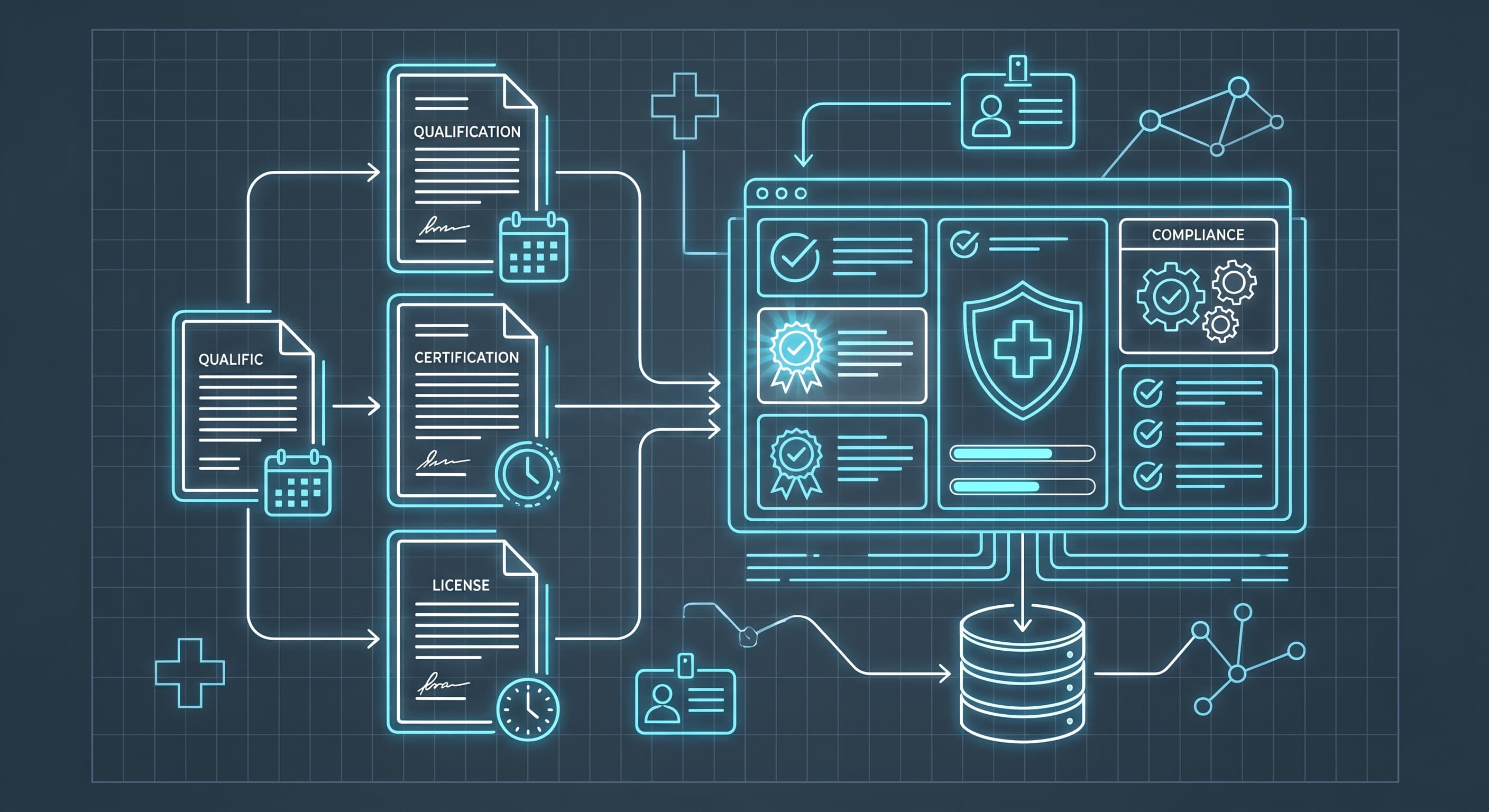
Once that line was clear, we built an AI-assisted flow that could read the incoming documents, identify the credential and qualification details that mattered, pull out the dates and key fields, and route the extracted information into a review step. Staff still validated the work. They just stopped spending their time transcribing it.
That distinction mattered. The goal was not to remove oversight. The goal was to reserve human attention for validation, exceptions, and accountability while the repetitive document-handling work moved into a system that could do it faster and more consistently.
03The results
Before the workflow redesign, the team was spending roughly half of its time processing these documents. After the new system was in place, that dropped to about a tenth.
That change freed the team from the repetitive mechanics of opening files, checking fields, and copying dates from one place to another. It also reduced mistakes in a place where a mistake is not cosmetic. Expired documentation in a hospital system creates real operational and compliance risk.
The result was a workflow that was faster, more reliable, and easier to manage over time because the recurring burden had been redesigned instead of merely worked around.
04What this means
This is a strong example of where AI workflow automation creates value in healthcare operations. The win did not come from replacing expert review with a black box. It came from redesigning a cumbersome document workflow so machines handled the repetitive extraction steps and people handled validation, exceptions, and accountability.
Hospitals and healthcare teams have more workflows like this than they often realize. Credentialing, intake review, records handling, and qualification checks are repetitive enough to automate, but sensitive enough that the system has to be built carefully. That is where thoughtful engineering matters most.
Before
~50%
of the team's time was going to document processing and manual data entry.
After
~10%
of the team's time was left for the same workflow after the redesign.
This was not an attempt to automate judgment. It was a way to remove the open, read, copy, and paste loop so trained staff could spend their time on review quality instead of transcription quality.
Running a document-heavy healthcare workflow?
If your team is buried under repetitive review work, that is usually a sign the workflow itself needs redesign, not just more staffing.
Book a CallRelated Case Studies
Explore other examples of how we've handled compliance, workflow design, and production delivery.